

A special thank you to Ofland Escalante for hosting us, and Bryce Canyon Country for the UTV adventure with Roam Outdoor Adventure Company!
Southern Utah doesn’t really unfold all at once.
It reveals itself in layers.
First come the open desert highways leaving Las Vegas behind. Then the cliffs begin rising out of nowhere. The terrain shifts from red rock to alpine forest to canyons so massive they stop looking natural and start looking theatrical. Around every bend, the landscape changes again like someone keeps swapping out entire worlds while you’re driving through them.
Amy and I recently spent several days exploring Utah’s Scenic Byway 12 corridor, using Escalante as a basecamp while visiting Bryce Canyon National Park, Grand Staircase-Escalante National Monument, and the endless backroads scattered throughout the region.
And somewhere between waterfall hikes, dark skies, outdoor showers, and dirt roads named things like “Hell’s Backbone,” it became obvious why people get attached to this part of the country.
During the trip, I also sat down with Noah Ellis, CEO of Ofland Escalante, to talk about the area, outdoor hospitality, and what makes this stretch of Southern Utah different from almost anywhere else in America.
Scenic Byway 12 Is One Of America’s Great Road Trips
There are roads you take to reach destinations.
Then there are roads that become the reason for the trip itself.
Scenic Byway 12 cuts through Southern Utah between Bryce Canyon National Park and Capitol Reef National Park, winding through tiny towns like Escalante, Boulder, and Tropic while passing sandstone cliffs, alpine forests, slot canyons, and stretches of open desert that barely look real.
One moment you’re driving through pine trees at elevation.
Twenty minutes later you’re crossing exposed slickrock ridges with thousand-foot drop-offs on either side.
Then suddenly you’re descending back into red canyon country again.
At one point during our interview, Noah described the drive from Las Vegas into Southern Utah as feeling like “four totally different planets.”
That’s probably the most accurate description possible.
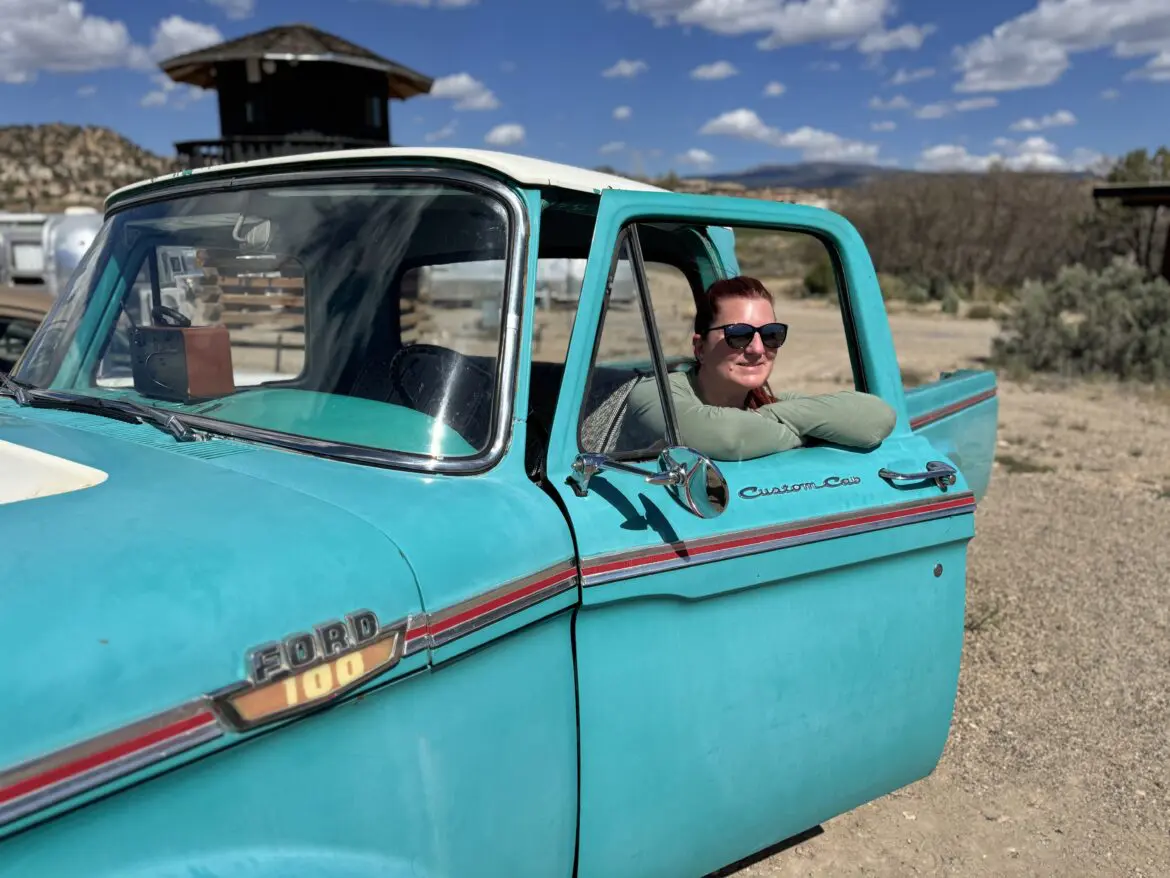
Escalante Works Because It Sits Between Everything
Escalante itself is small. Quiet. Remote enough that the night skies still look prehistoric.
But that location becomes a huge advantage if you actually want to explore the region instead of just checking one national park off a bucket list.
From here, you can day-trip into:
- Bryce Canyon National Park
- Capitol Reef National Park
- Grand Staircase-Escalante National Monument
- Kodachrome Basin State Park
- Hole-in-the-Rock Road
- Hell’s Backbone Road
- Countless slot canyons, overlooks, and trailheads scattered across the monument
That’s really the magic of this area. You’re not locked into one experience.
You can spend the morning hiking to waterfalls, the afternoon driving mountain backroads, and the evening sitting under some of the darkest skies in the country wondering why humanity collectively decided strip malls were the superior evolutionary path.
Lower Calf Creek Falls Is Worth The Hike
When I asked Noah what first-time visitors shouldn’t miss, one of the first things he mentioned was Lower Calf Creek Falls.
After doing the hike ourselves, it’s easy to understand why.
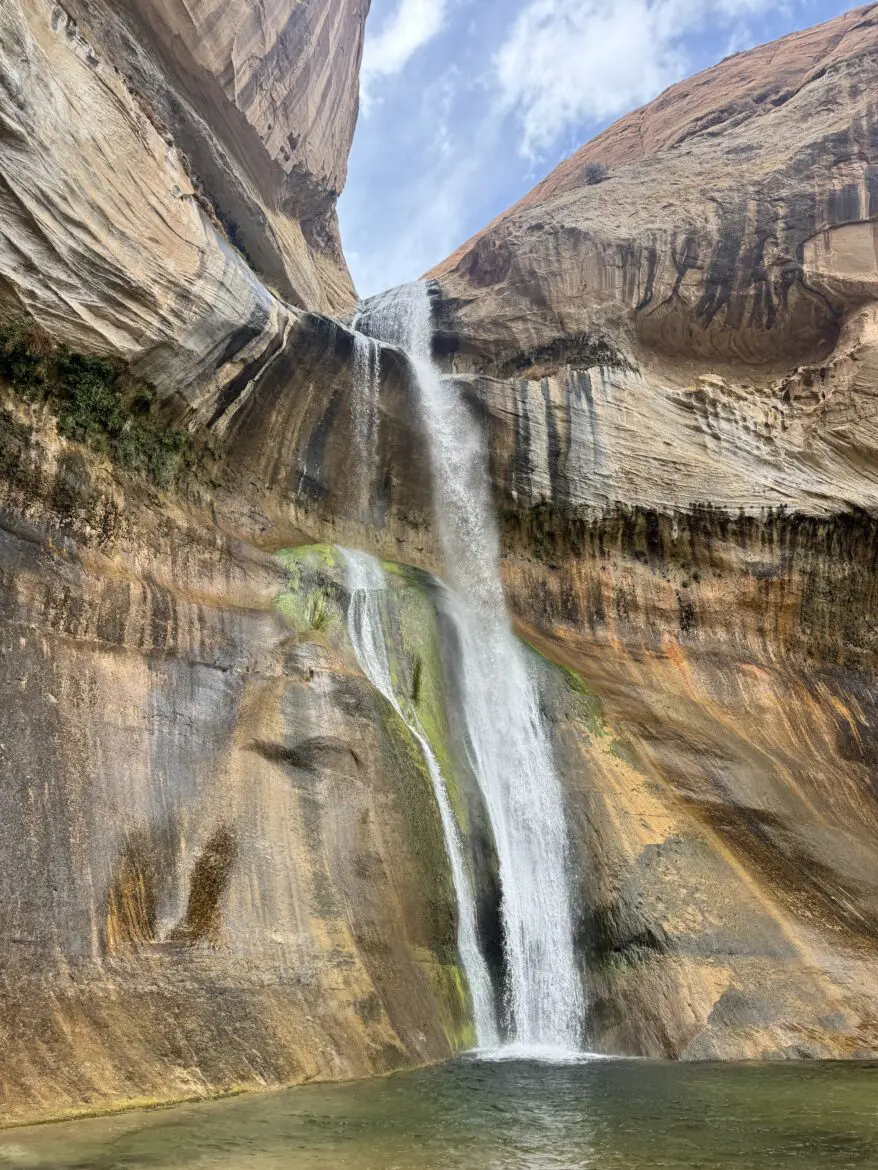
The trail winds through desert canyon terrain alongside the creek before eventually opening up to a 126-foot waterfall crashing into an icy pool surrounded by moss-covered rock walls and cottonwoods.
The hike itself isn’t especially technical, but the deep sand makes it more tiring than people expect.
Still worth every step.
Especially once you realize you’re standing beside a massive waterfall hidden in the middle of what otherwise feels like another planet.
Mossy Cave Is One Of Bryce Canyon’s Most Underrated Stops
Bryce Canyon deservedly gets most of the attention in this region, but one of our favorite smaller stops was Mossy Cave Trail near Tropic.
It’s short, easy, and feels completely different from the park’s massive amphitheaters and overlooks.
The trail follows a stream through the rock before splitting toward either a small cave or a surprisingly beautiful waterfall tucked into the canyon wall. Families were playing in the creek when we visited. Hikers sat quietly near the falls just listening to the water.
No rush. No chaos. No crowds sprinting for Instagram photos like caffeinated gazelles.
Just people enjoying the place.
Southern Utah works best when you leave space for stops like that.
Hell’s Backbone Road Feels Wild In The Best Way
Then there’s Hell’s Backbone Road.
Which sounds like something invented by a heavy metal band until you actually drive it.
The route climbs high into alpine terrain north of Escalante before crossing the narrow Hell’s Backbone Bridge suspended above steep canyon drops. The contrast is what makes the drive so strange and memorable. One hour earlier, you’re surrounded by desert sandstone. Then, you’re weaving through a pine forest at an elevation with cool mountain air replacing the desert heat.
It feels isolated in a way that’s getting harder to find.
No tour buses. No massive developments. Just dirt roads, cliffs, and enormous stretches of silence.
Kiva Koffeehouse Somehow Lives Up To The Hype
During our interview, Noah casually called Kiva Koffeehouse one of the most beautiful coffee shops in the world.
That sounded exaggerated.
Then Amy and I walked outside with coffee and looked over the canyon.
Turns out Noah may have actually undersold it.
The building sits perched above the landscape with panoramic views stretching for miles across layered sandstone and canyon country. Places like this are scattered all over Southern Utah. Tiny roadside stops that would become world-famous attractions almost anywhere else somehow just casually exist out there.
Southern Utah Rewards Wandering
One of the more interesting parts of my conversation with Noah was hearing how often he talked about the surrounding businesses and experiences instead of trying to keep travelers entirely focused on the property itself.
That feels important in a region like this.
You’re supposed to wander here.
Take a UTV ride through the backcountry with ROAM Outdoor Adventure Co.. Grab pizza at Escalante Outfitters. Pull off at random overlooks. Explore roads you’ve never heard of. Hike trails that weren’t originally part of the plan.
Some of the best moments out there happen accidentally.
The Dark Skies Change Everything
Then night falls.
And the entire region transforms.
The skies around Escalante are so dark and clear that the stars stop looking distant and start feeling overwhelming. During our stay, the moon was bright enough that I genuinely thought I had accidentally left a light on outside our cabin.
When there’s no moon at all, the sky becomes borderline absurd.
Noah described it simply during our interview:
“It’s insane what you can see with your naked eye.”
That’s not poetic exaggeration.
You forget how much of the night sky most people never actually see anymore until you stand somewhere like this.
Why This Part Of Utah Stays With People
Southern Utah has no shortage of famous national parks.
But what makes the Escalante region memorable is everything surrounding them.
The hidden waterfalls.
The tiny towns.
The canyon coffee shops.
The dirt roads leading nowhere obvious.
The drive-in movie screens glowing in the desert at night.
The feeling that there’s always one more overlook waiting around the next bend.
It doesn’t feel overly polished.
It feels discovered.
And maybe that’s why people keep coming back here even after checking Bryce Canyon or Capitol Reef off the list. There’s always another road to take. Another trail to hike. Another strange little stop in the desert you weren’t expecting to remember later.
That’s the dangerous thing about Southern Utah.
You think you’re just visiting.
Then suddenly you’re planning another trip before the first one’s even over.